Noorani Qaida for Beginners: Where to Start
Noorani Qaida gives a new reader a sequence for learning Arabic letters and sounds. The aim is to recognise and read unfamiliar combinations, not simply remember the order of examples on a page. Here is a manageable way to approach your first lessons.
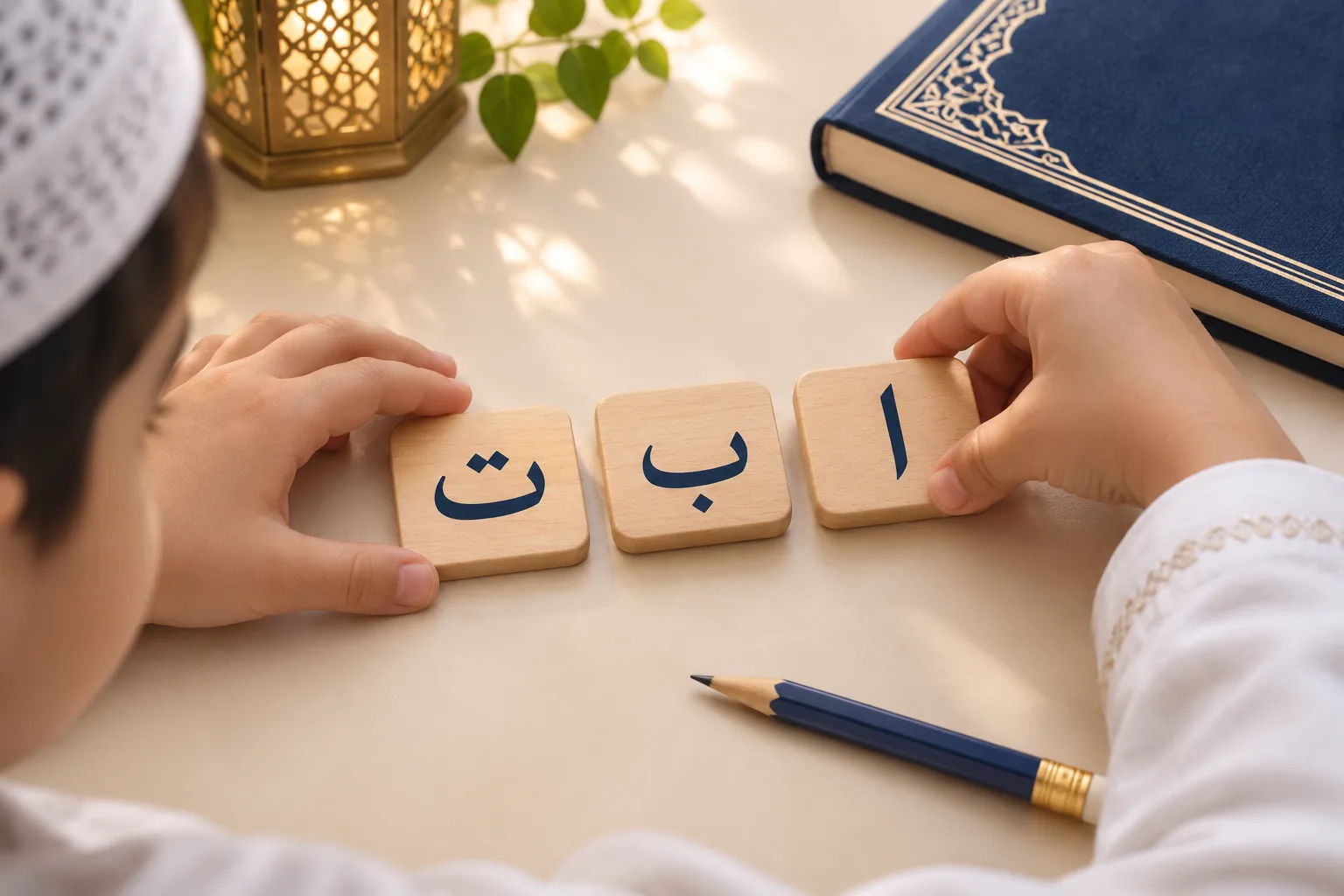
Check what you can recognise without a prompt
Look at a few letters in a different order from the page you usually practise. Can you recognise them independently? If you can, try identifying them in joined forms. This separates familiarity with a page from a reading skill you can use elsewhere.
Tell your tutor which examples are difficult. Knowing some surahs by heart does not automatically mean you can read Arabic, and recognising letters does not mean you are ready for every joined word. A short assessment helps place you at a useful starting point.
Build one reading skill at a time
Follow the sequence chosen by your teacher and use the same edition or learning material. Trying several different books at once can make it harder to track what you have covered.
- Recognise letters and practise their sounds with feedback.
- Learn how vowel marks change the sound you read.
- Join small combinations slowly before increasing speed.
- Practise sukoon, shaddah and lengthening as they appear in your lessons.
- Read fresh examples to check understanding rather than page memory.
Use a short, specific practice task
Ask your tutor to select a small set of examples for the days between classes. Read aloud, pause where you are uncertain and note the exact sound to ask about. Repeating an uncertain pronunciation many times can make the next correction harder.
For a child, sit nearby and help them find the right page without giving every answer. For an adult, keep a simple notebook with the page and one correction. In either case, careful practice is a better goal than finishing a large number of pages.
Move to Quran reading when the foundation is ready
Ask the tutor to check whether you can read unfamiliar combinations with reasonable independence. If a particular letter or mark keeps causing difficulty, revisit it before adding more material. Your next step may combine Qaida revision with short Quran passages.
There is no reliable completion deadline that applies to every beginner. Progress depends on starting experience, attendance and practice. Use improvements in accuracy and independence as your signs of progress.